

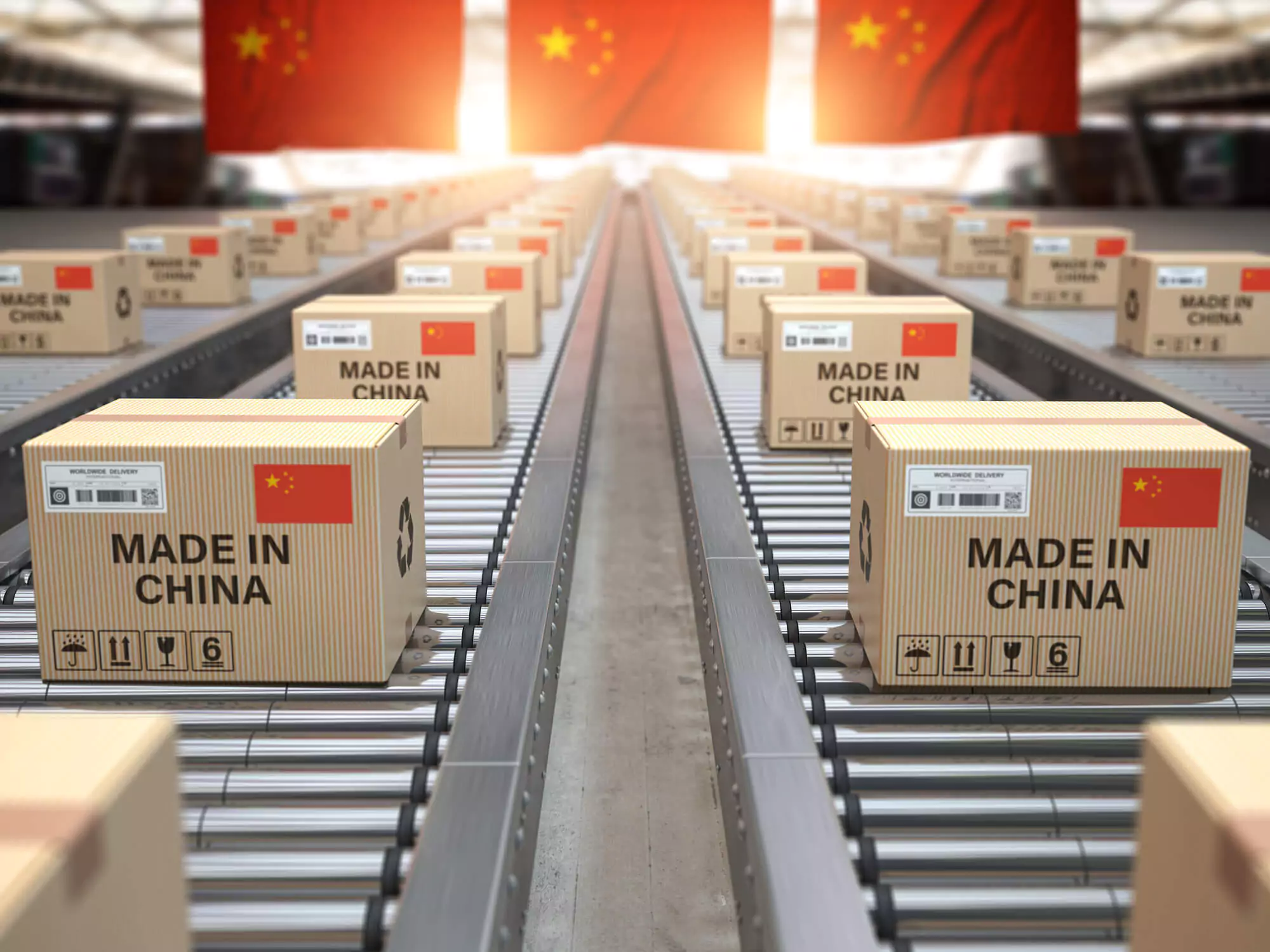
In year 2018, American import of goods from China reached an all-time high of $538.5 billion. Then the Trump administration ramped up trade measures against Beijing and began imposing tariffs on more than $300 billion worth of Chinese goods. Most of those measures remain in place even after Joe Biden became U.S. president.
The chart below shows that the political tensions did hurt bilateral trade in the following two years, but American companies have resumed sourcing massively from China. Import value soared to $536 billion in 2022, recovering almost all lost ground.

The strong figures defy talks that the world’s two largest economies are on track to decouple. While there may be decoupling in certain strategic product areas, other sectors remain unharmed, including a broad array of manufactured and agricultural products.
Citing national security, the U.S. government vows to lower its supply chain reliance on China. But most companies care more about delivering their products to consumers on time, and in the most cost-effective way for their own operations.
Southeast Asia: Complementary Role
Facing rising costs in China and trade war with the U.S., many foreign investors have sought to complement their China operations by shifting some production to other lower-cost countries, according to consulting firm Dezan Shira & Associates (DSA).
Southeast Asian nations (led by Vietnam) have emerged as perhaps the biggest beneficiary of this “China Plus One” trend, thanks to a low-cost business environment, geographic proximity to China, and numerous trade agreements with foreign countries.
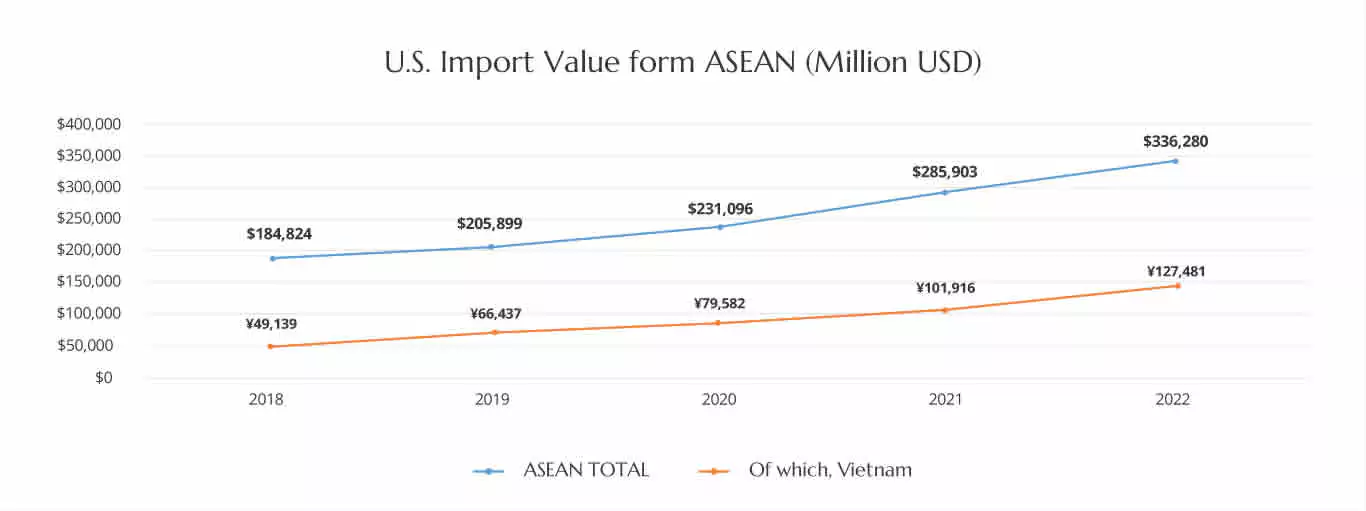
In year 2022, the U.S. sourced a total of $336 billion goods from the Association of Southeast Asian Nations, or ASEAN. Almost 40% of them were sourced from Vietnam market alone. The U.S. sourcing value from ASEAN was merely $185 billion in 2018, representing a robust 82% growth over four years.
However, DSA argues that China’s advanced supply chain and supplier network, driven by the government’s long-term national policies, make it the “world factory”. At present, no single country, including Vietnam, can fully replace China’s manufacturing capacity.
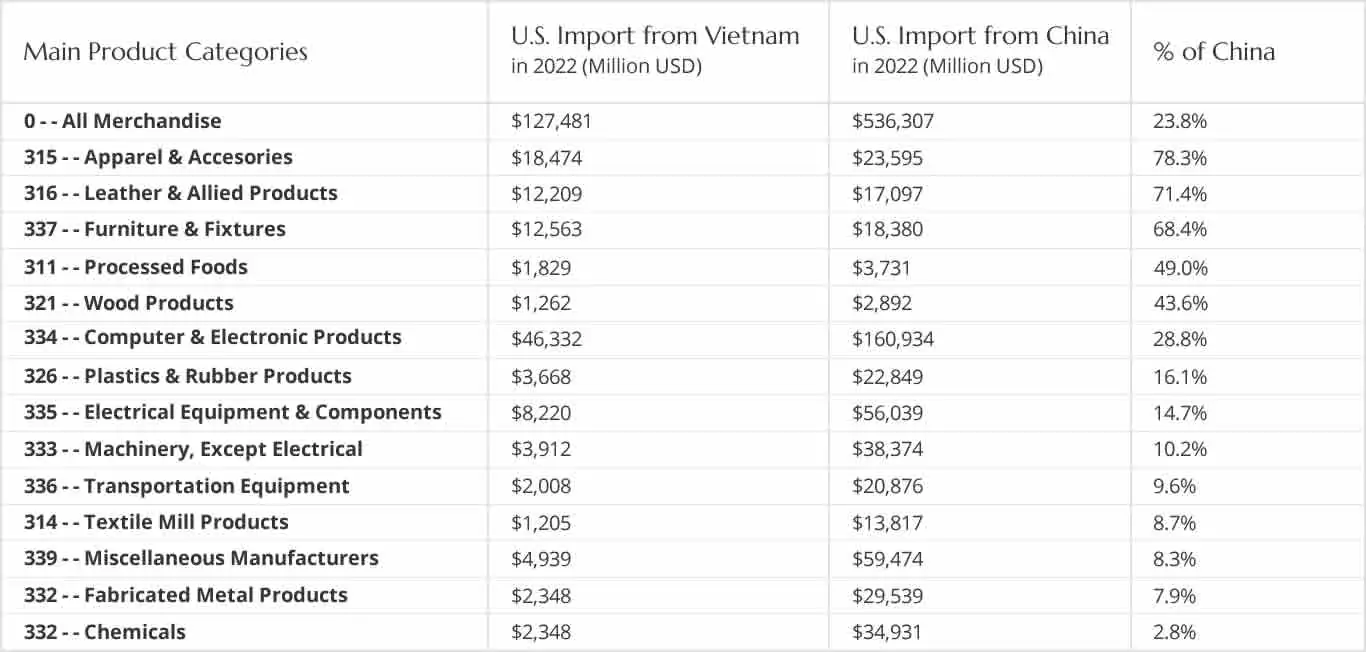
We at CEDARS make a comparison of China vs Vietnam in the table below. Currently the export size of Vietnam is only 24% that of China. Vietnam has relative advantages in such products as apparel, leather and furniture. But it is outperformed by China in plastics & rubber, electrical equipment, machinery, and many other industries.
CEDARS is a leading provider of China sourcing services since 2007 and offers a one-stop shop to develop both branded and private-label products. We are pleased to share our insights and expertise on how to do business with China.